
More than a Market… Meet Honningperler
From handcrafted beeswax lip balms to jars of golden summer honey, Honningperler is Kristin's one-woman operation rooted in curiosity, resilience, and a deep love of natural processes. Based in Haslev, about an hour south of Copenhagen, she keeps four beehives in her garden and transforms what they produce into a growing range of honey, creams, and beeswax products.
An unlikely beginning
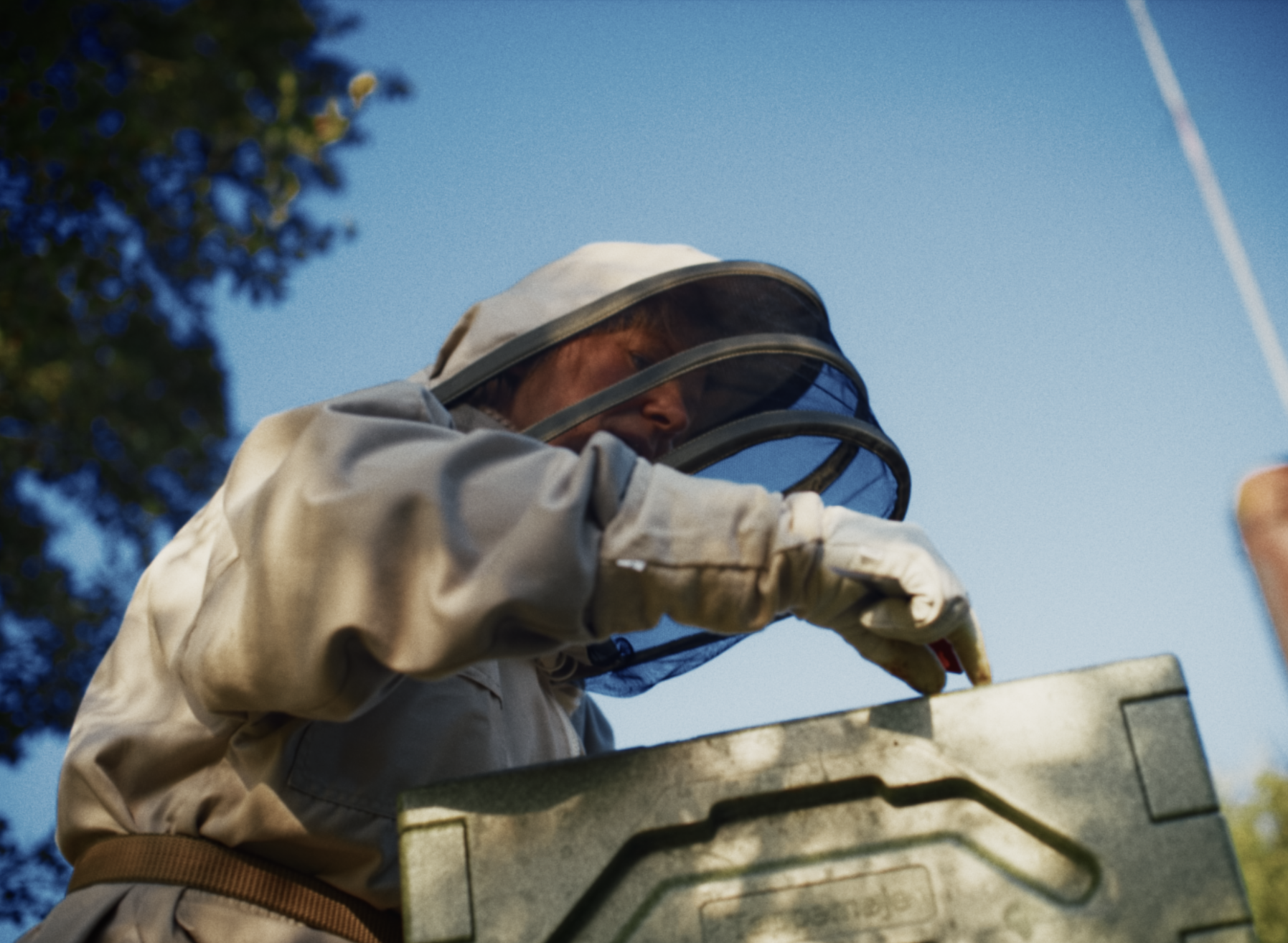
Kristin is originally from eastern Germany, near Magdeburg. She moved to Denmark in the early 2000s, studied hotel management in Heidelberg, and returned in 2007. For years she worked for major chains including Hilton, Marriott, and Comwell, building a career in hospitality that sharpened her ability to connect with people from all walks of life.
Her path to beekeeping started with her mother. In 2016, her mother took up hunting at the age of 64 — and something about that clicked. If her mother could start something that bold at that stage of life, Kristin figured she could do the same. She narrowed it down to two options: winter bathing or beekeeping. Beekeeping won, driven by what she describes simply as curiosity.
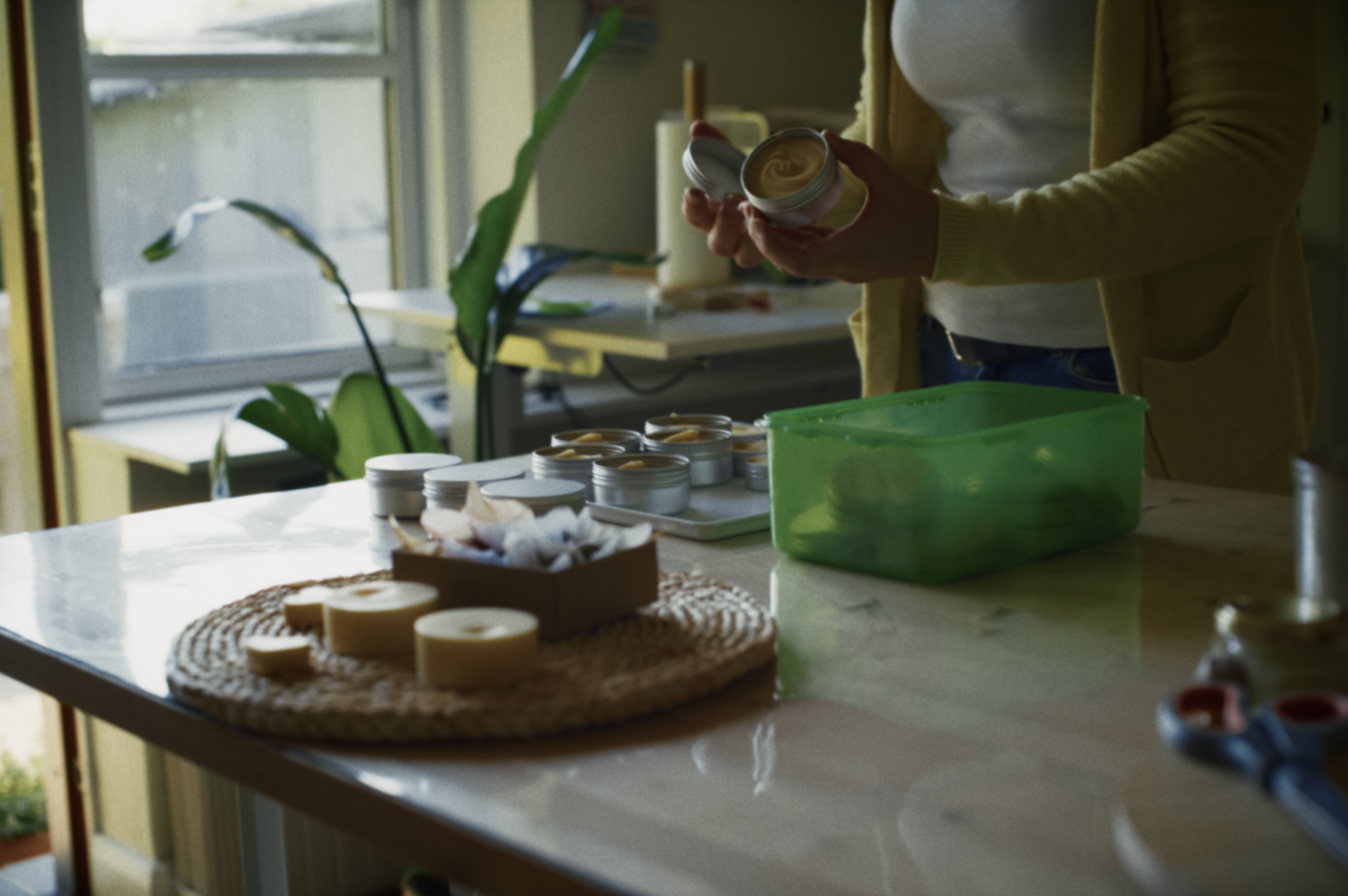
She enrolled in a two-year programme at her local beekeeper association, and it was there, during the meetings, that the seed for Honningperler was planted. Fellow beekeepers were making their own lip balms, creams, and salves from beeswax and honey, and the quality was remarkable. When Kristin asked why she couldn't find products like these in any shop, the answer was unanimous: too expensive, too time-consuming, not worth the trouble. She decided to see for herself.
Her first product was a lip balm made from just three ingredients: beeswax, honey, and olive oil. Getting it certified took half a year and introduced her to the tangled world of European and Danish cosmetic regulations — Denmark, she discovered, enforces even stricter standards than the broader EU framework. But Kristin's approach to obstacles is straightforward: keep calling the next number on the list, and eventually someone says yes.
The rhythm of the bees
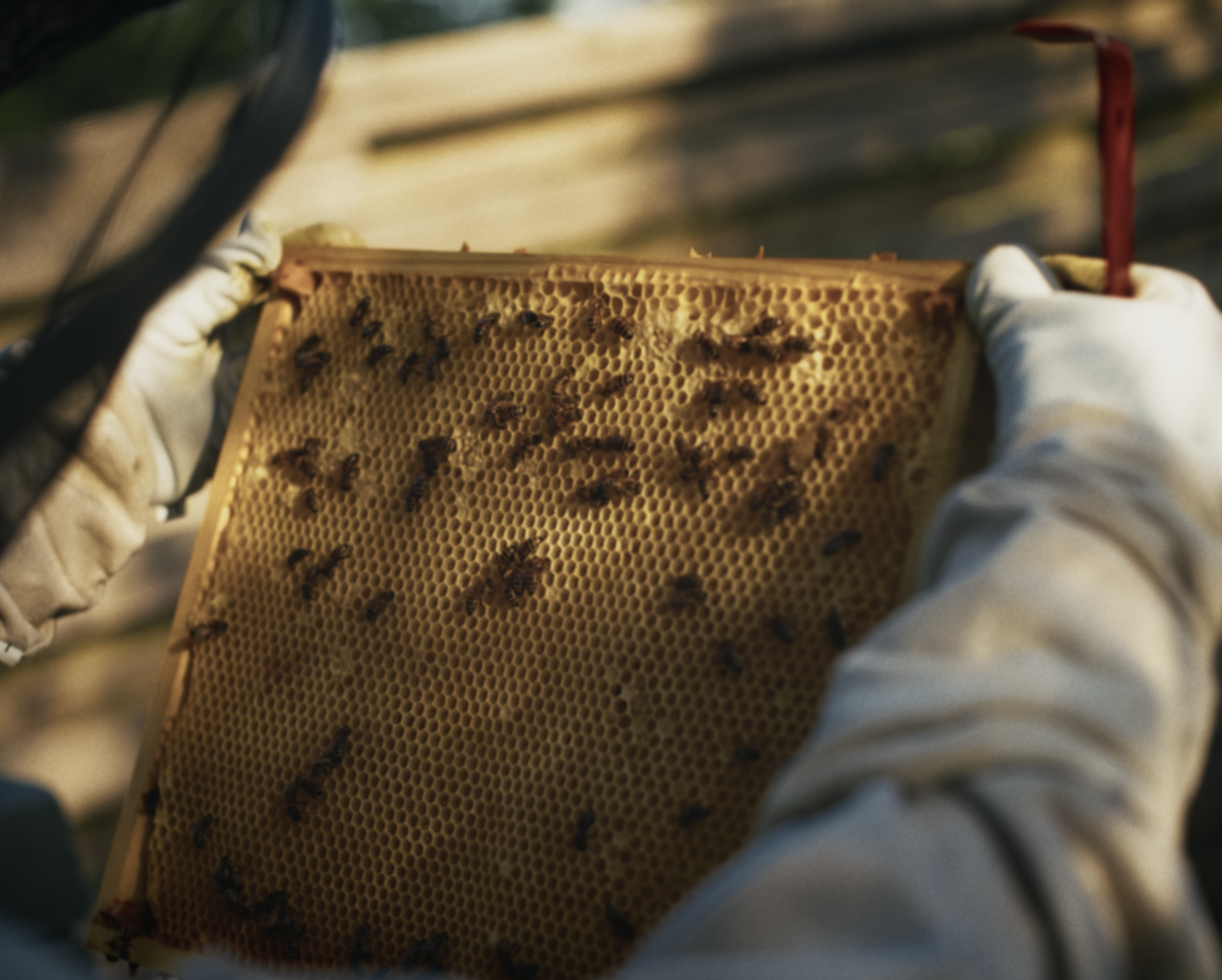
Beekeeping follows a rhythm that changes dramatically with the seasons. During the winter months, a colony contracts to somewhere between five and ten thousand bees, huddled together in a single magazine. Then spring arrives, and the queen begins laying up to two thousand eggs a day. Growth is rapid, and by April a second magazine needs to be ready. The lower levels belong to the queen and her brood; the upper ones are reserved exclusively for honey. In a productive summer, the stack can reach four or five magazines tall, each capable of holding up to twenty kilos of honey.
In Danmark, the first harvest of the year often comes from rapeseed flowers, if there are fields nearby. The bees fill the magazines quickly, and rapeseed honey stiffens within a day because of its high sugar content; it tends to be pale, almost white. Summer honey is different: golden, more intensely flavoured, shaped by whatever flowers are blooming. Every year is different, and every harvest reflects what the landscape offered.
Kristin checks her hives at minimum every seven days during the season, watching for signs that the queen might swarm. On a calm, sunny day, she says, opening a hive is one of the most peaceful experiences she knows. The bees are quiet, the work is meditative, and holding a frame of fresh honey feels like holding something extraordinary.
Honningperler at Grønt Marked
Kristin sells through three channels: her web shop for private customers, wholesale accounts, and the Sunday markets at Grønt Marked.
Of the three, the market holds a special place. It provides a rhythm she can count on. More than that, the market is where she gets to be a person, not just a producer. After days spent alone in production mode, preparing wholesale orders with no one to talk to, the market is a chance to share her story and watch people respond to it.
For Kristin, that interaction is not just about selling a product. She made the honey. She harvested it. She wants to see it appreciated, and she wants to tell the story of how it came to be. Sometimes, she says, you can see the surprise on a customer's face when they realise that what they are holding is truly handmade by the person standing in front of them. That moment of recognition — the realisation that this kind of small-scale, transparent production still exists — is what keeps her going.
Why small-scale matters
In an era increasingly shaped by automation and artificial intelligence, small producers represent something that cannot be replicated: authenticity and transparency. New customers who discover her through the web shop and happen to live nearby will sometimes drive out to Haslev just to confirm that she is real.
Kristin is not interested in competing with large manufacturers. There are thousands of lip balms already on the market, she acknowledges with a shrug. But there will always be people looking for the real thing. As long as people are still surprised and moved to find a small producer making everything by hand, she sees no reason to stop.
Honningperler is built on a simple conviction: if she takes care of her bees, keeps the quality high, and stays the course, the rest will follow — and Kristin is determined to prove, first and foremost to herself, that a one-woman operation made entirely by hand is not just possible, but worth it. It is this combination of self-reliance, warmth, and quiet determination that defines Honningperler — and it is exactly what a producers' market like Grønt Marked is for.
Find Honningperler at Grønt Marked on Sundays throughout the season.
Feature written by Caro Mages